In an age where our digital presence often precedes our physical one, few data points are as personal and revealing as our location. Every tap, search, and interaction on our smartphones subtly paints a picture of our daily movements, habits, and even our preferences. But what happens when that digital tether feels less like a convenience and more like an intrusion? This deep dive is all about Understanding the 'Why': Reasons for Disabling Location Sharing, exploring the myriad motivations behind turning off one of our devices' most potent features.
It's a conversation less about how to turn it off (though we'll cover that too), and more about why the desire to go "off-grid" digitally has become a defining aspect of modern privacy. Whether you're a casual user or a privacy advocate, understanding these motivations is key to navigating our increasingly connected world with intention and control.
At a Glance: Why People Turn Off Location Sharing
- Privacy is Paramount: Many simply prefer keeping their whereabouts private, protecting personal space in a digital age.
- Boost Battery Life: Continuous location tracking is a notorious battery drainer.
- Enhance Security: Sharing location can expose individuals to risks like stalking or identity theft.
- Temporary Digital Break: Sometimes, you just need a moment of peace without digital pings.
- Bypass Restrictions: Location data can sometimes limit access to certain online content or services.
- Control Your Data: Take charge of what apps and services know about you.
Decoding Your Digital Footprint: What Exactly Is Location Sharing?
At its core, location sharing is your device's way of broadcasting its current geographical position. This isn't just a simple GPS coordinate; it's a sophisticated interplay of GPS satellites, Wi-Fi networks, and cellular data triangulating your exact spot. This information is then used by everything from your navigation app guiding you home to social media tagging your dinner spot, and even apps offering personalized recommendations based on where you are.
While often beneficial, this constant flow of data creates a detailed record of your current, past, and even predictable future movements. For many, the idea of "Invisible Mode" has emerged as a strategic response—a deliberate choice to safeguard this highly personal data and maintain privacy by discreetly disabling location sharing across various platforms and devices. It’s about taking back control of your digital presence, deciding who gets to see where you are, and when.
The Core Reasons: Why You Might Turn Off Location Sharing
The decision to disable location sharing isn't usually born from a single impulse. Instead, it's often a confluence of practical concerns, privacy principles, and a growing awareness of our digital footprint. Let's explore the driving forces behind this choice.
Enhanced Privacy: Your Digital Whereabouts Are Yours
This is, perhaps, the most fundamental reason. In an era where every movement can be tracked, cataloged, and even monetized, many individuals simply prefer not to disclose their whereabouts to others, or even to the faceless entities behind the apps they use. It’s about maintaining a sense of personal space, a digital boundary that respects their right to anonymity in their daily lives.
Think about it: Your device knows where you live, where you work, where you exercise, where you shop, and whom you spend time with. This mosaic of data can paint an incredibly detailed picture of your life, one that many feel should remain exclusively theirs. Disabling location sharing is a direct way to reclaim that privacy, ensuring that your physical presence isn't constantly broadcast to an unseen audience.
Boosting Battery Life: Saving Juice, One Location Ping at a Time
Beyond the philosophical aspects of privacy, there’s a highly practical motivator: battery life. Continuous location tracking, especially when relying heavily on GPS, is a significant power drain. Your phone is constantly working—pinging satellites, scanning Wi-Fi networks, and communicating with cell towers—all to pinpoint your exact location. This requires substantial energy.
If you've ever noticed your phone's battery plummeting rapidly on a day you've used a navigation app extensively or kept a fitness tracker running, you've witnessed this firsthand. For many, turning off location services, or at least restricting them to "While Using" for most apps, is a simple, effective way to extend their device's battery life throughout the day. It’s a trade-off: a bit less real-time convenience for a lot more uptime.
Security & Personal Safety: Protecting Yourself in a Connected World
The stakes for location sharing extend beyond mere convenience; they delve into personal security. Sharing your precise location, especially consistently or with a wide audience, can inadvertently create vulnerabilities. In the wrong hands, this information can be misused in alarming ways:
- Stalking: For individuals concerned about or experiencing stalking, even seemingly innocuous location sharing can provide a perpetrator with critical, dangerous information.
- Identity Theft: Knowing your regular routines and locations can make you a target for various forms of identity theft, allowing criminals to anticipate your absence from home or work.
- Physical Harm: In extreme cases, broadcasting your location could expose you to physical harm, particularly if shared with individuals who have malicious intent.
- Home Security: Publicly sharing that you’re on vacation, far from home, essentially advertises an empty house to potential burglars.
For these reasons, disabling location sharing isn't just about privacy; it's a crucial layer of personal safety, particularly for individuals feeling threatened or those who simply want to minimize potential risks. It’s a proactive step to ensure their physical whereabouts remain a private matter, not a public bulletin.
The Need for a Digital Detox: Seeking Alone Time
Sometimes, the "why" is less about malice and more about mindfulness. In our hyper-connected world, the pressure to always be available, always "findable," can be overwhelming. People sometimes disable location sharing as a temporary break, a way to maintain distance for alone time or a much-needed respite from social interactions.
Imagine wanting an undisturbed afternoon to yourself, or a quiet weekend away without the implied expectation of immediate availability or the unsolicited "Where are you?" texts. Disabling location sharing provides that mental and digital breathing room. It’s about creating a personal sanctuary, even if just for a few hours, free from the digital tether.
Bypassing Digital Borders: Location-Based Restrictions
While less common, some users disable or spoof their location to bypass geographical restrictions on certain services or content. Many online streaming services, gaming platforms, and even news outlets use your IP address and inferred location to restrict access to content based on your country or region.
By disabling location services on browsers and using tools like Virtual Private Networks (VPNs) to mask their true IP, users can sometimes circumvent these digital borders. This isn't always about nefarious intent; it can be about accessing content legally available in another region, or simply wishing to appear elsewhere for privacy reasons. It's a strategic move to experience a less geographically constrained internet.
Navigating the Nuances: What Happens When You Disable Location
Turning off location sharing isn't a universally invisible act. While it offers significant privacy benefits, it's important to understand the ripples it can send through your digital experience.
App Behavior: Not All Apps React the Same
Disabling general location sharing will definitely not go unnoticed by certain apps or services. For many, location is not just a feature; it's foundational. Navigation apps, ride-sharing services, weather apps, and even some local news apps require location access for proper operation. If you disable it, these apps might:
- Cease to Function: A ride-share app, for instance, can't find you or a driver without location data.
- Lose Core Features: A weather app might default to a manually set city instead of your current one.
- Prompt Repeatedly: Some apps will constantly ask you to re-enable location services, making them less user-friendly until you comply or adjust settings.
The key is to adjust settings mindfully. Many operating systems allow you to grant location access "While Using the App" rather than "Always," striking a balance between functionality and privacy.
Emergency Access: The Safety Net Stays Put
Here’s a crucial piece of information: Even if you've disabled location services for all your apps and general device settings, emergency services (like 911 in the US or 112 in Europe) may still have access to your approximate location. Your mobile carrier typically provides this data to first responders, often using a combination of cell tower triangulation and other technologies, to ensure help can find you in a crisis. This vital safety feature is usually designed to override personal privacy settings when an emergency call is made.
The "Share My Location" Notification: A Heads-Up for Your Contacts
On platforms like Apple's "Find My" or similar family-sharing features, specifically turning off "Share My Location" will often notify your contacts (e.g., family members or close friends) who were previously sharing locations with you. This isn't a universal feature across all apps, but it's common for integrated device-level sharing. It’s important to be aware of this, as it means your decision might not be as "invisible" as you initially hoped to certain individuals. This is distinct from apps just losing functionality; it’s an active communication to others.
Beyond the Toggle: Phone Off, Airplane Mode, and Temporary Sharing
- Phone Off: Turning off your phone entirely is the most definitive way to prevent new location tracking signals from being generated by your device. However, your service or internet provider can still see the last known location before it was off, and its current location once it's turned back on. They also have other ways to approximate your location through cell towers if the phone is just powered down and not completely offline from the network.
- Airplane Mode: Engaging Airplane Mode effectively hides your location by preventing the device from updating its location online. It stops cellular, Wi-Fi, Bluetooth, and GPS connectivity. While it doesn't inherently disable the GPS chip functionality, it stops the device from communicating that data outwards. It's a quick and effective way to go dark temporarily.
- Temporary Disabling: Many smartphones offer features like "Temporary Location Sharing" or "Location Sharing Timeout." This allows you to share your location for a limited period (e.g., one hour, until the end of the day) and then automatically turns it off. This is a great option for situations where you need to share your location for a specific purpose (e.g., meeting a friend) without forgetting to turn it off later.
Understanding these nuances helps you make informed decisions about when and how to manage your location privacy, ensuring your actions align with your intentions. For a deeper dive into stealthier methods, you might explore resources on how to stop location sharing discreetly.
Your Toolkit for Digital Discretion: How to Stop Sharing Location
Taking control of your location data doesn't require advanced technical skills, but it does require knowing where to look and what settings to adjust. Here's a comprehensive guide to navigating your privacy settings.
First Line of Defense: Device-Wide Controls
These methods apply broadly to both iPhone and Android devices, offering robust control over your location data at the operating system level.
Killing Location Services Entirely
This is the most direct approach. By turning off location services at the device level, you prevent all apps and system services from accessing your geographical data, with the noted exception of emergency calls.
- On iPhone: Go to
Settings>Privacy & Security>Location Servicesand toggle off the main "Location Services" switch. - On Android: Navigate to
Settings>LocationorLocation Servicesand toggle off the main "Location" switch.
Use Case: Ideal if you want maximum privacy and are willing to forgo location-dependent app functionality.
Fine-Tuning App Permissions
A more granular approach allows you to decide which apps get location access and under what conditions. This is often the best balance between privacy and functionality.
- On iPhone: Go to
Settings>Privacy & Security>Location Services. Here, you'll see a list of all your apps. Tap on each app and choose: - Never: The app cannot access your location.
- Ask Next Time or When I Share: The app will ask for permission each time it needs location data.
- While Using the App: The app can only access your location when it's actively open and in use.
- Always: The app can access your location even when in the background. (Use this sparingly!)
- On Android: Go to
Settings>Location>App location permissions. Select individual apps and chooseAllow only while using the app,Ask every time, orDon't allow. Android may also offer "Battery saving" or "High accuracy" settings under advanced location options to further fine-tune how location data is gathered.
Use Case: Recommended for everyday use, allowing essential apps (like maps) to function while restricting others.
Activating Airplane Mode: The Digital Cloak
As discussed, Airplane Mode is a quick toggle to sever all wireless connections, including cellular, Wi-Fi, Bluetooth, and crucially, GPS. While it doesn't disable the GPS chip itself, it prevents your device from transmitting location data.
- On iPhone: Swipe down from the top-right corner (or up from the bottom on older models) to open Control Centre and tap the airplane icon.
- On Android: Swipe down from the top of the screen to access Quick Settings and tap the Airplane Mode icon.
Use Case: For short, temporary periods when you want to go completely offline and untraceable, like during a flight or when seeking absolute solitude.
The VPN Advantage: Masking Your Digital Address
A Virtual Private Network (VPN) doesn't directly disable your device's GPS, but it's a powerful tool for masking your internet-based location (your IP address). When you connect to a VPN, your internet traffic is routed through a server in a location of your choice, making it appear as though you are browsing from there.
- How to Use: Download and set up a reliable VPN app on your device. Connect to a server in a city or country different from your actual location.
Use Case: Primarily for protecting your online anonymity, bypassing geo-restrictions, and encrypting your internet connection, thereby hiding your true location from websites and online services.
Browser Privacy: Closing the Backdoor
Your web browser can also request and utilize your location data, often to provide localized search results or content.
- How to Disable: Check your browser's privacy settings or preferences. Look for options that allow websites to access your location data and disable them. For example, in Chrome, go to
Settings>Privacy and security>Site Settings>Location. - Enhance Further: Consider using privacy-enhancing browser extensions that block location requests or referrers.
Use Case: Essential for maintaining privacy while browsing, preventing websites from tracking your physical location.
Regular App Permission Audits
Apps constantly update, and sometimes these updates can silently alter permissions. It’s good practice to periodically review which apps have access to your location.
- How to Audit: Go to your device's
Settings, locate the list of installed apps, select an app, and customize its location permissions. Pay particular attention to apps that request "Always" access, especially if their core function doesn't seem to require constant tracking (e.g., a photo editing app shouldn't need your location all the time).
Use Case: An ongoing maintenance task to ensure your privacy settings remain aligned with your preferences.
iPhone Specific Strategies
Apple's iOS offers a few unique layers of location privacy control.
Silencing "Significant Locations"
Your iPhone keeps a detailed log of places you frequently visit, calling them "Significant Locations" (formerly "Frequent Locations" or "Important Places"). This data is used to provide personalized services like predictive traffic routes. While encrypted and stored locally, some users prefer to disable this feature entirely.
- How to Disable: Go to
Settings>Privacy & Security>Location Services>System Services. Tap "Significant Locations" (you may need to authenticate with Face ID/Touch ID), then toggle off the switch. You can also clear your history here.
Use Case: To prevent your iPhone from building a passive history of your movements and habits.
Safari's Private Browsing Mode
Safari's Private Browsing mode doesn't specifically disable your device's GPS, but it prevents websites from storing your browsing history, cookies, and, importantly for this context, from using your current location for that session.
- How to Use: Open Safari, tap the tabs icon (lower-right), then tap the "Private" button (bottom-left) to activate.
Use Case: For browsing sessions where you want to minimize tracking by websites without globally turning off location services.
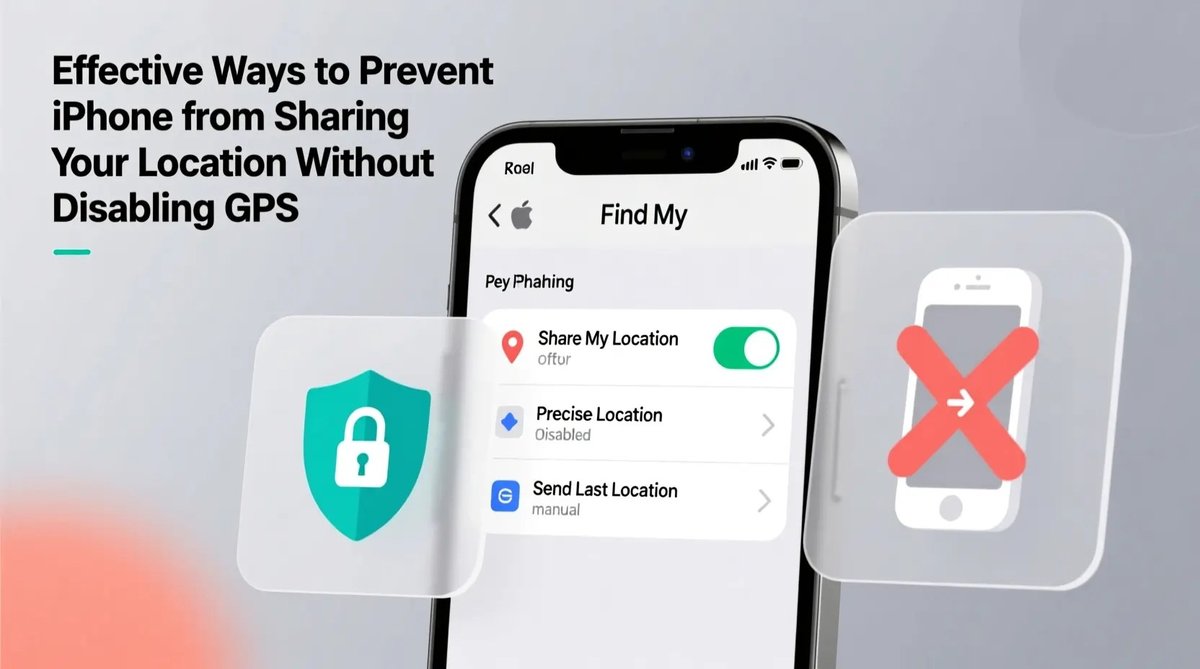
Turning Off "Share My Location" Service
This specific setting controls sharing your location via Apple's "Find My" app with family and friends.
- How to Disable: Navigate to
Settings>Privacy & Security>Location Services. Select "Share My Location" and toggle off the slider. - Important Note: Your contacts who were previously sharing locations with you will receive a notification that you have stopped sharing.
Use Case: When you want to stop sharing your location specifically with individuals or groups configured through Apple's sharing features.
Considering a Location Spoofer
For those who need to virtually change their location for specific apps (e.g., location-based games or services), an iPhone location spoofer can be an option.
- How to Use: These are typically third-party desktop applications (e.g., iFoneTool MapGo) that connect to your iPhone. You select a desired location on a map, and the software makes your iPhone "believe" it's at that virtual spot.
- Caution: Use reliable, trusted software, as some tools can be risky or unreliable. Also, be aware that misrepresenting your location might violate the terms of service for certain apps.
Use Case: For very specific scenarios where you need to trick apps into thinking you're in a different physical location.
Android-Specific Tweaks
Android's open nature often provides more granular control and developer options.
Advanced Location Settings for Apps
When managing location sharing for specific apps on Android, you may find additional settings beyond just "allow" or "deny." These can include:
- Location Accuracy: Choose between "High accuracy" (uses GPS, Wi-Fi, Bluetooth, and mobile networks for the most precise location), "Battery saving" (uses Wi-Fi, Bluetooth, and mobile networks, less accurate but consumes less power), or "GPS only" (uses just GPS, which can be slower but more precise outdoors).
- Wi-Fi and Bluetooth Scanning: These options, often found under
Settings>Location>Location Services, allow apps to scan for Wi-Fi networks and Bluetooth devices even when Wi-Fi and Bluetooth are otherwise turned off. Disabling these can further enhance privacy and save battery.
Use Case: To fine-tune the balance between location precision, battery consumption, and privacy for specific applications.
Social Media Lockdown: Reclaiming Your Digital Footprint
Social media platforms are notorious for encouraging location sharing, from geotagging posts to "checking in" at venues. Controlling this requires a platform-by-platform approach.
- Access Privacy Settings: Go to the
SettingsorPrivacy Settingssection of each social media app (e.g., Facebook, Instagram, Twitter, Snapchat). - Locate Location Options: Look for options related to
Location Services,Geotagging,Location History, or specific location-sharing features. - Customize Preferences:
- Disable Altogether: Turn off location access for the social media app entirely.
- Share with Specific Groups: If available, limit who can see your location to "Friends," "Specific Friends," or "Only Me."
- Per-Post Preferences: Some platforms allow you to decide whether to add a location to each individual post.
- Review Third-Party Apps: Check which third-party apps are linked to your social media accounts and what permissions they have (especially location access). Revoke access for any you don't recognize or trust.
- Regular Review: Social media privacy policies and features change frequently. Make it a habit to review your settings periodically.
Use Case: Essential for ensuring your social life doesn't inadvertently broadcast your physical location to unintended audiences.
Mastering Your Digital Boundaries: Best Practices for Location Privacy
Disabling location sharing isn't a one-time fix; it's an ongoing commitment to managing your digital footprint. Here are some best practices to maintain robust location privacy.
- Regularly Review and Adjust Device Settings: Technology evolves, and so do privacy settings. Make it a routine to check your device's location services settings, enabling location services only for apps where it's truly essential for functionality (e.g., navigation).
- Utilize a VPN Consistently: For all your online activities, using a reliable VPN is a fundamental step. It masks your IP address, encrypts your internet connection, and effectively hides your true geographical location from most online trackers and services.
- Exercise Caution with Social Media: Be highly selective about sharing your location on social media. Limit location tagging in posts, avoid "checking in" at your home or workplace, and regularly review your social media privacy settings. Remember that public posts with location data can be easily scraped.
- Disable Geotagging in Photos: Many smartphones automatically embed location data (geotags) into the metadata of photos you take. Before sharing photos online, especially those taken in private locations, consider disabling geotagging in your camera settings or using tools to strip metadata from images.
- Stay Informed About Privacy Policies: Take a few moments to understand the privacy policies of the apps and services you use regularly. While often lengthy, they detail how your location data (and other personal information) is collected, used, and shared.
- Regularly Update Software and Applications: Software updates often include critical security patches and privacy enhancements. Keeping your operating system and all apps up-to-date helps protect you from known vulnerabilities that could compromise your location data.
- Educate Yourself on Potential Risks: Understanding why location sharing can be risky (from physical safety to data aggregation for advertising) empowers you to make smarter, more informed decisions about when and where to share your location.
Empowering Your Privacy Choices
The decision to disable location sharing is a personal one, driven by a blend of privacy concerns, security awareness, and practical considerations. It's a proactive step in a world that constantly nudges us towards greater transparency. By understanding the core reasons and familiarizing yourself with the various tools and methods available, you're not just turning off a switch; you're asserting control over your digital identity.
Ultimately, navigating the balance between digital convenience and personal privacy is an ongoing journey. The goal isn't necessarily to become entirely invisible, but to be intentionally visible—choosing when, how, and with whom you share the intimate details of your location. Your digital boundaries are yours to define, and knowing the 'why' behind disabling location sharing is the first powerful step in that process.